Press Kit
The Event
Moldova and Its Jews — Six Centuries
Jewish life in the Moldovan lands is older than most of Europe's famous communities. Jews are recorded in Moldavia from the fourteenth and fifteenth centuries; a Sephardic Jew served as personal physician to Stephen the Great in 1467, and in the seventeenth century the ruling princes formally confirmed the community's status. By 1739 a decree of Grigore Ghica already named the Jews among the principal communities of Kishinev. In 1774 the Jews of the growing town founded their chevra kadisha — the community's institutional birth certificate — and elected their first rabbi, remembered in the communal record as a student of the Baal Shem Tov.
Under the Russian Empire the community became one of the largest in the Jewish world. By the census of 1897, 50,237 Jews lived in Kishinev — forty-six percent of the city — within a Bessarabian Jewish population of some 228,000. Jews built much of the city's economy: at the century's end, the greater part of Kishinev's factories and steam mills were Jewish-owned.
Across the land
The story was never Kishinev's alone. The first documentary mention of Jews in the Moldavian lands is a charter of 1391, by which ruler Roman I granted Jews the right to live in all regions; in the early 1800s the Moldavian Principality was the only country in Europe where Jews had the right to own and farm land. Soroca — first mentioned as a community in 1653 — was more than half Jewish by 1897, with twenty synagogues; its Great Synagogue stands to this day. Bălți counted thirty-seven synagogues by 1939, each named for its parishioners' craft. Orhei, over half Jewish, gave the world Meir Dizengoff, first mayor of Tel Aviv — a synagogue there serves today as the Museum of the Jews of Orhei. By 1935, some 350 synagogues stood across Bessarabia.
1903 — the name the world learned
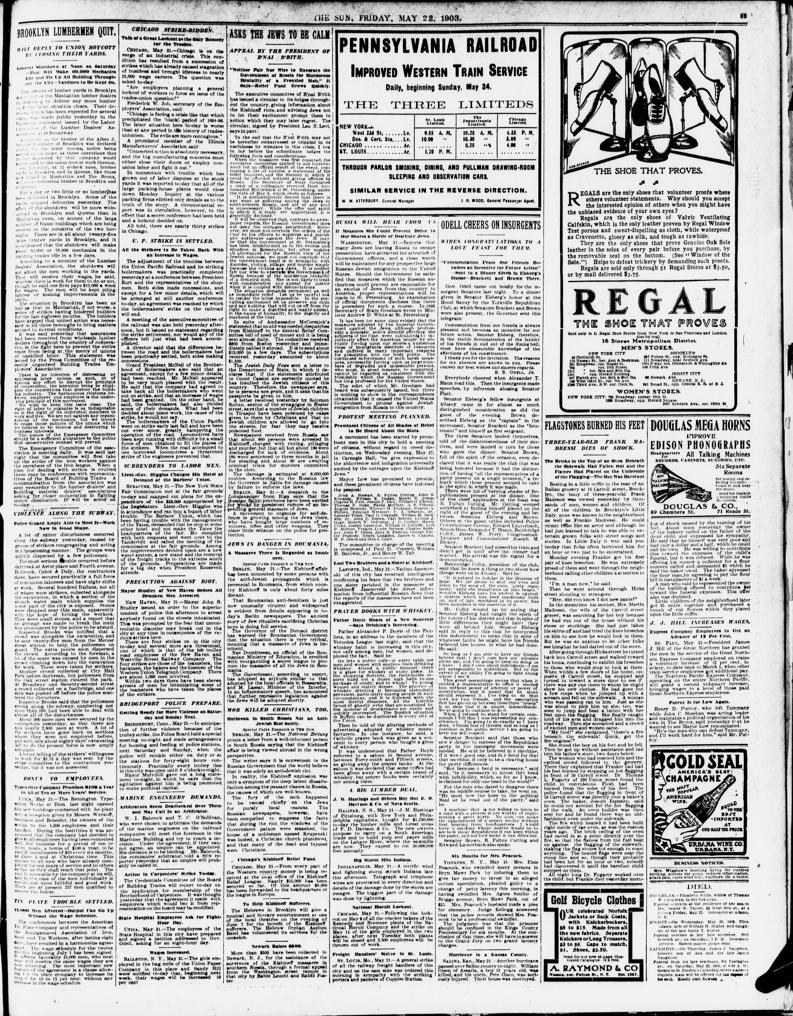
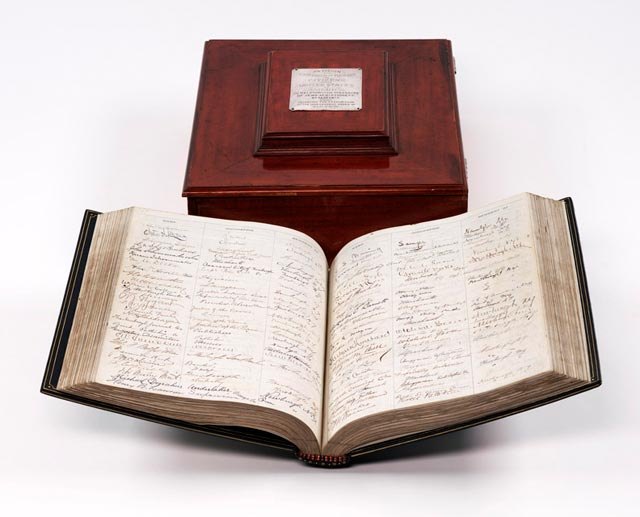
On April 6–7, 1903 (Old Style; April 19–20 by the Gregorian calendar), a pogrom incited by the local antisemitic press killed 49 Jews, wounded hundreds, and destroyed roughly 1,350 homes and shops. The response made history: The New York Times printed the smuggled report "Jewish Massacre Denounced" on April 28; front pages from Omaha to Kentucky carried the story for months; Michael Davitt reported from the city for the Hearst press; a petition of protest presented through President Theodore Roosevelt — refused by Russia — lies to this day in the U.S. National Archives. The pogrom summoned the American Jewish Committee into being in 1906, galvanized the Jewish self-defense movement, and moved Bialik to write the most influential Hebrew poem of the twentieth century. The same year, the Kishinev editor who incited the violence published, in his St. Petersburg paper, the first version of the "Protocols of the Elders of Zion." Both of modern antisemitism's chief weapons trace to one city, one year, one man — which is why what happens in this city now carries weight far beyond it.
The Shoah
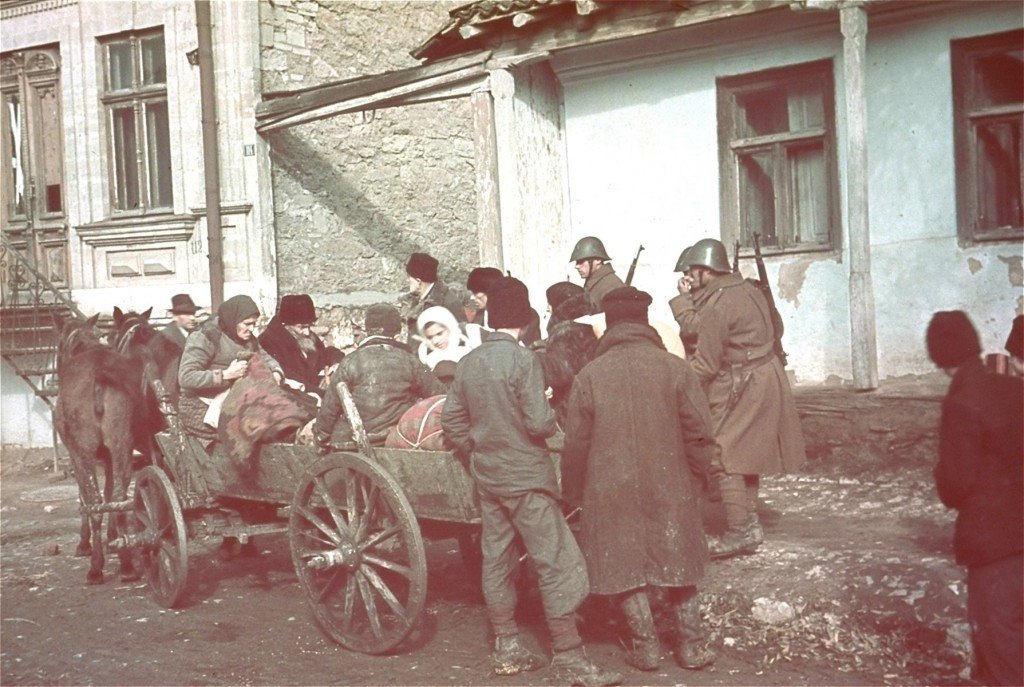
Romanian and German forces took Kishinev in July 1941. The Kishinev ghetto was established on July 26, 1941, holding more than 11,500 Jews; its prisoners were deported to Transnistria that autumn. Across Bessarabia and Transnistria, the International Commission on the Holocaust in Romania, chaired by Elie Wiesel, concluded that between 280,000 and 380,000 Jews perished under Romanian administration. By the war's end, contemporary wire reports counted the surviving Jews of Kishinev in the dozens. Seventy-nine rescuers from Moldova have been recognized as Righteous Among the Nations.
The Soviet decades and the revival
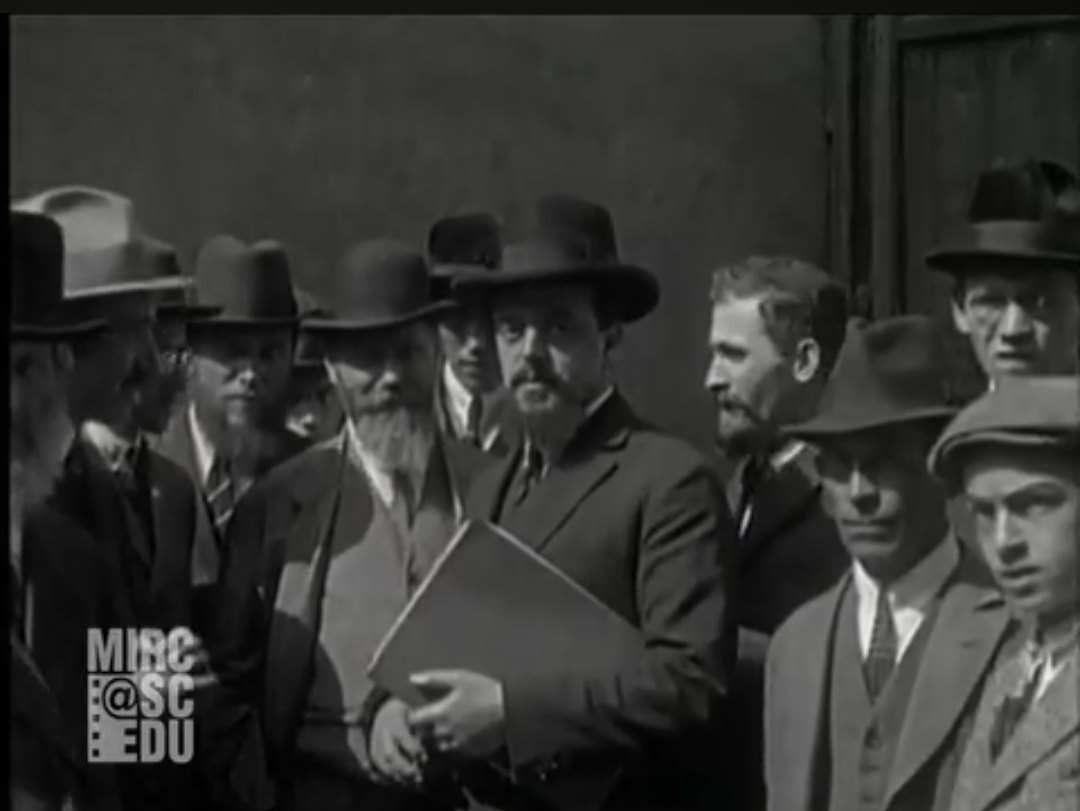
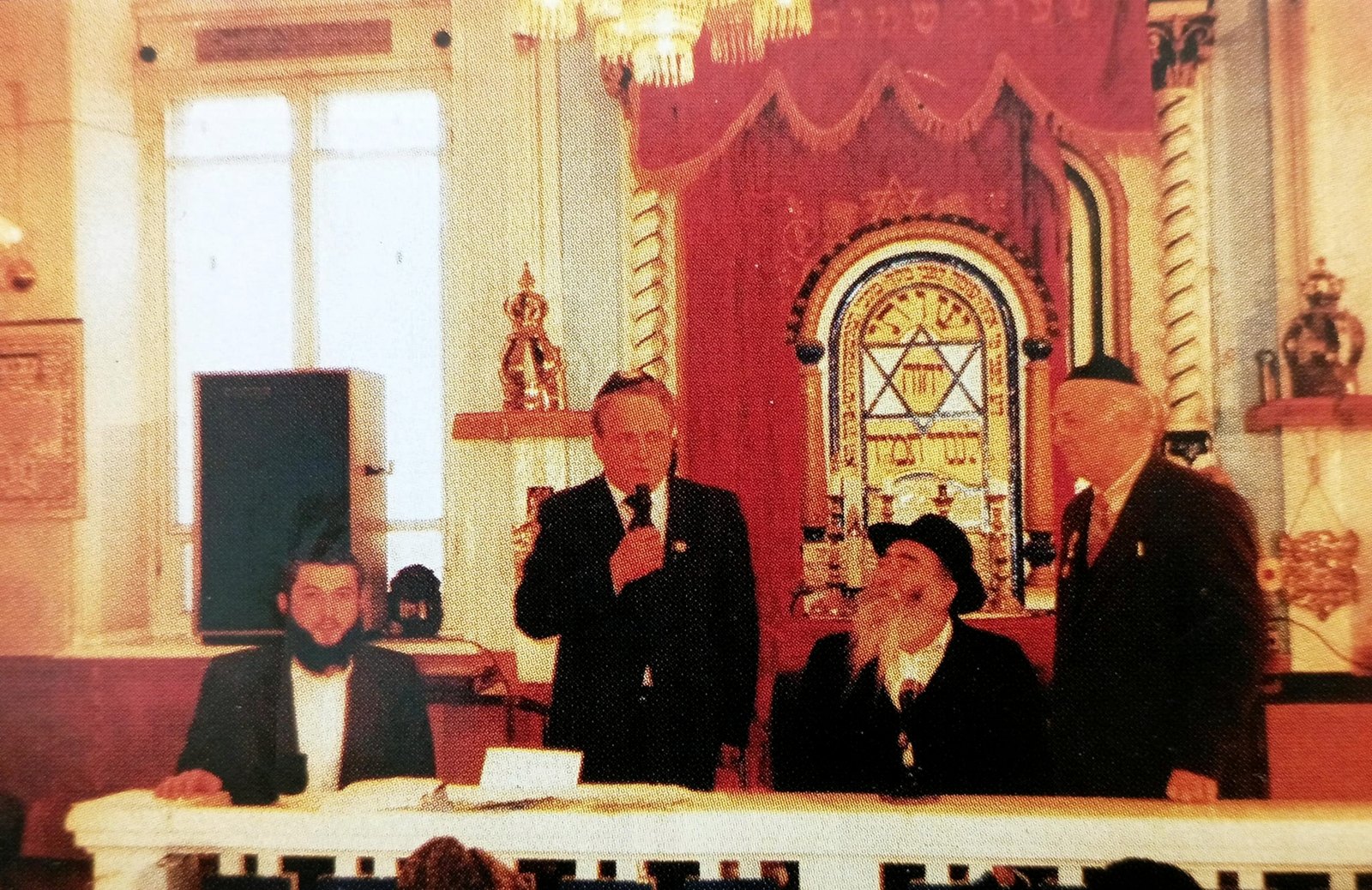
Under Soviet rule the synagogues were closed one by one — all but one: the Glaziers' Synagogue, built in 1886, which remained open through the entire era and stands today as the seat of Jewish Chișinău. Jews were tried for the wish to emigrate — in Kishinev in June 1971, nine defendants received sentences of up to five years. Yet Hebrew was studied underground, and the community endured. From 1989–90, with Moldovan independence, Jewish life returned to the open: schools, synagogues, and communal institutions were rebuilt, even as most of Moldovan Jewry emigrated — from roughly 65,672 at the 1989 census to a community of thousands today.
In 2022, the city the world once rescued became the rescuer: as war struck Ukraine, Chișinău became a principal road out for tens of thousands of Jewish refugees, sheltered and moved onward by the community — an operation the President of Moldova came in person to thank.
The Jewish Community of Moldova Today
Moldova's Jewish community numbers in the thousands — estimates range to 15,000 including families of partial Jewish heritage — concentrated in Chișinău, with communities in Bălți, Tiraspol, Bender, Rybnitsa, and other towns on both banks of the Nistru.
The communal body
Organized Jewish self-government in this land has deep roots: in 1935, forty Jewish communities of Bessarabia united in a single Union. Its modern successor took shape with the Jewish Society for Culture, founded in 1989 as the Soviet era closed, and since 2008 as the Jewish Community of the Republic of Moldova — the representative body of Moldovan Jewry, led by Chairman Alexandru Bilinkis. The Community maintains the institutions of Jewish life, leads Holocaust remembrance and restitution work, and represents the community to the state and to world Jewry.
The rabbinate and Chabad
Chabad-Lubavitch has served Moldova since 1990, when Rabbi Zalman Abelsky arrived in Kishinev as the emissary of the Lubavitcher Rebbe and took up the office of Chief Rabbi. Today, under Head Shliach Rabbi Zushe Abelsky, the community's rabbinate serves synagogues, schools, camps, and welfare institutions across the country — including the communities of Transnistria, in the very towns to which Kishinev's Jews were once deported.
2022 — the refugee operation
In the first weeks of the war in Ukraine, the community rented resorts, fielded emissary families and staff by the dozens, and received tens of thousands of Jewish refugees in transit — among them more than one hundred children of Odessa's Jewish orphanage, the youngest thirty-seven days old. On April 6, 2022 — the 119th anniversary of the pogrom — the President of Moldova visited to give thanks in person. National and international press documented the operation extensively.
The Rabbis of Kishinev — An Unbroken Chain
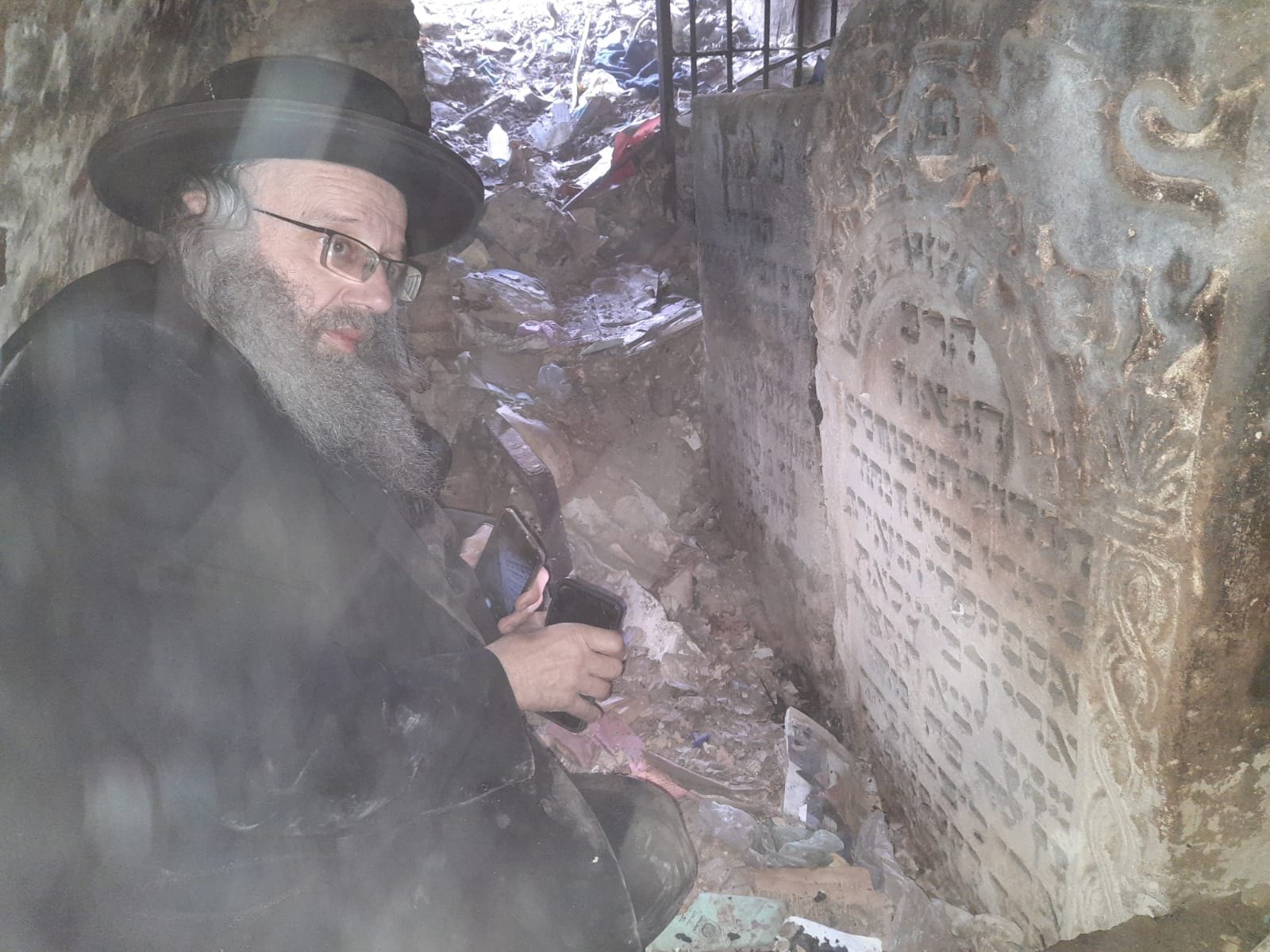
The chair being filled at this inauguration was first set in 1774, when the young community elected Rabbi Zalman of Shargorod, a student of the Baal Shem Tov. Rabbi Aryeh Leibush of Lantzut led the community for many years until his death in 1844; his lost resting place was rediscovered in 2022, beside that of his most famous successor.
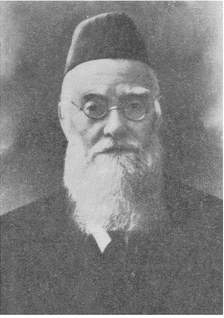
Rabbi Yehuda Leib Tsirelson (1859–1941)
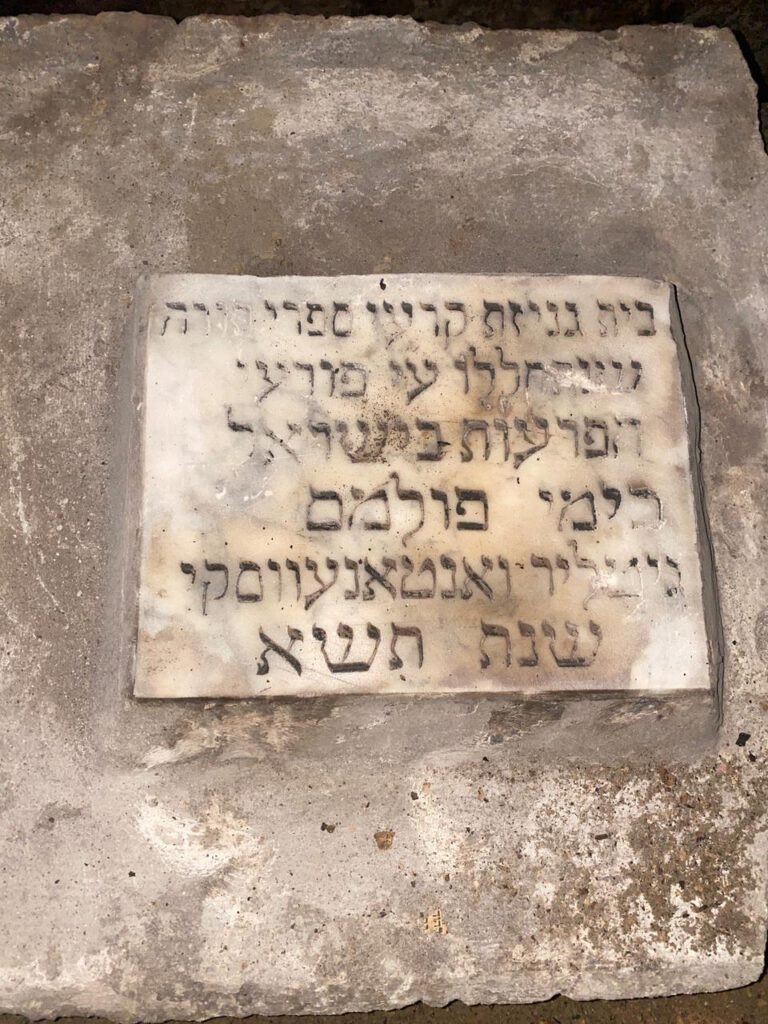
Chief Rabbi from 1908, Tsirelson was one of the great rabbinic figures of his age: a posek consulted across the Jewish world, a founder of Agudath Israel who presided over its First Knessia Gedolah in Vienna in 1923, and a member of Romania's parliament. In December 1926 he resigned from the Senate in protest of antisemitism, in an address the chamber refused to enter into its official record. He was killed in the first days of the war in 1941. For eighty years, conflicting wartime reports left open whether he had ever been buried; in 2022, searchers cleared a sealed cave in the old Jewish cemetery of Kishinev and found his gravestone. His city had kept him.
The hidden years
Through the Soviet decades the city had no chief rabbinate — but it had keepers: the prayer leaders and teachers of the Glaziers' Synagogue, the one house of prayer that never closed. Across the Dniester in Rybnitsa, Rabbi Chaim Zanvl Abramowitz — the Ribnitzer Rebbe — maintained the full life of a chassid under Soviet rule, and is revered to this day by thousands who ascend to his resting place in New York.
Chief Rabbi Zalman Abelsky (1990–2014)
In 1990 the Lubavitcher Rebbe's emissary arrived in a Kishinev with one open synagogue and half a century of enforced silence. Rabbi Zalman Abelsky took up the office of Chief Rabbi and held it for a quarter century — rebuilding schools, kashrut, mikvah, and communal life, and receiving Moldova's presidents, who came to him for blessings — until his passing in 2014. The rabbinate he restored has served Moldova without interruption since.
Rabbi Menachem Mendel Axelrod
On May 3, 2026, the rabbis of Moldova's registered communities, from both banks of the Nistru, elected Rabbi Menachem Mendel Axelrod Chief Rabbi of the Jewish Community of the Republic of Moldova, with the participation of the Conference of European Rabbis. His inauguration continues the chain this backgrounder records: set in 1774, crowned by Tsirelson, kept in secret for fifty years, restored by Rabbi Zalman Abelsky — and carried forward now. [Full biography and interview availability via the press office.]
Image Library




Usage. Library of Congress newspaper scans and the 1903 petition scans are in the public domain and free for reproduction at any size. Items marked "request" (USHMM, Ohalei Tzadikim, JewishGen, newsreel) require permission from the holding archive — contact details at each link. Community-archive photographs are released for editorial coverage of this event with credit: "Courtesy Jewish Community of the Republic of Moldova / Chabad of Moldova." High-resolution files of all cleared images are available from the press office as a single download.